





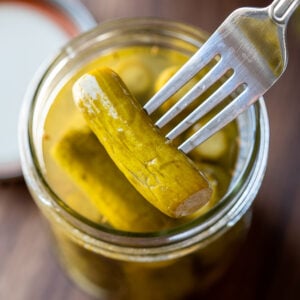
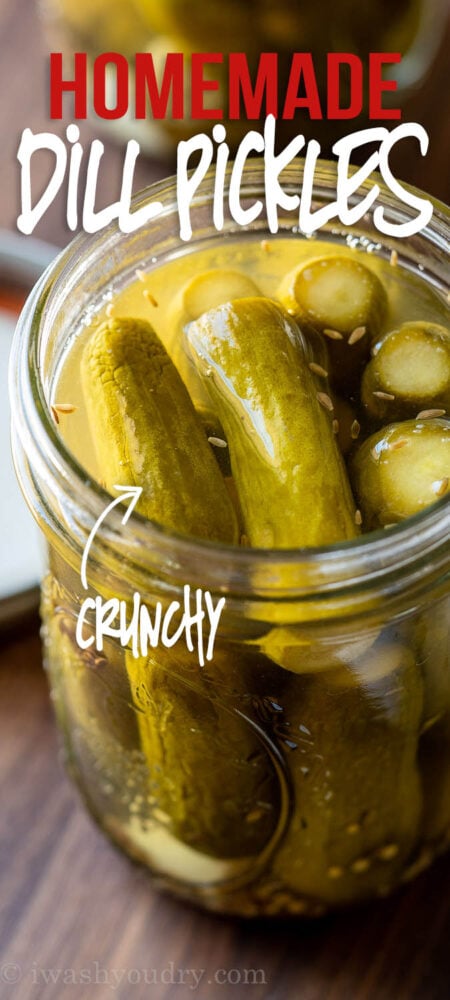
Put all those garden cucumbers to good use with this easy Homemade Canned Dill Pickles Recipe!
You may also enjoy these Quick Pickles and Onions or my Homemade Pickled Beets too.
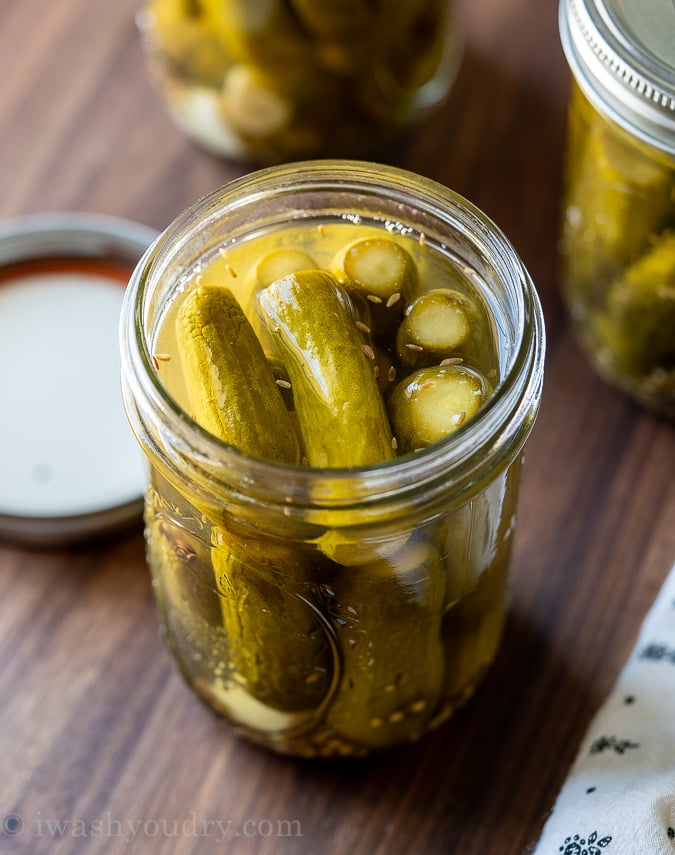 My family is OBSESSED with pickles. Open up a jar and they are gone in minutes.
That’s why we’ve planted rows and rows of cucumbers this year in our backyard garden. I’ve perfected my homemade canned dill pickles recipe and I should be set for crunchy, dill pickles all year long.
Homemade Canned Dill Pickles
This recipe is for making shelf stable (meaning they can be stored in the pantry for up to a year) pickles.
It does require a little bit more work than my Quickles (quick refrigerator pickles), but it’s well worth the time.
Ingredients Needed For Homemade Dill Pickles
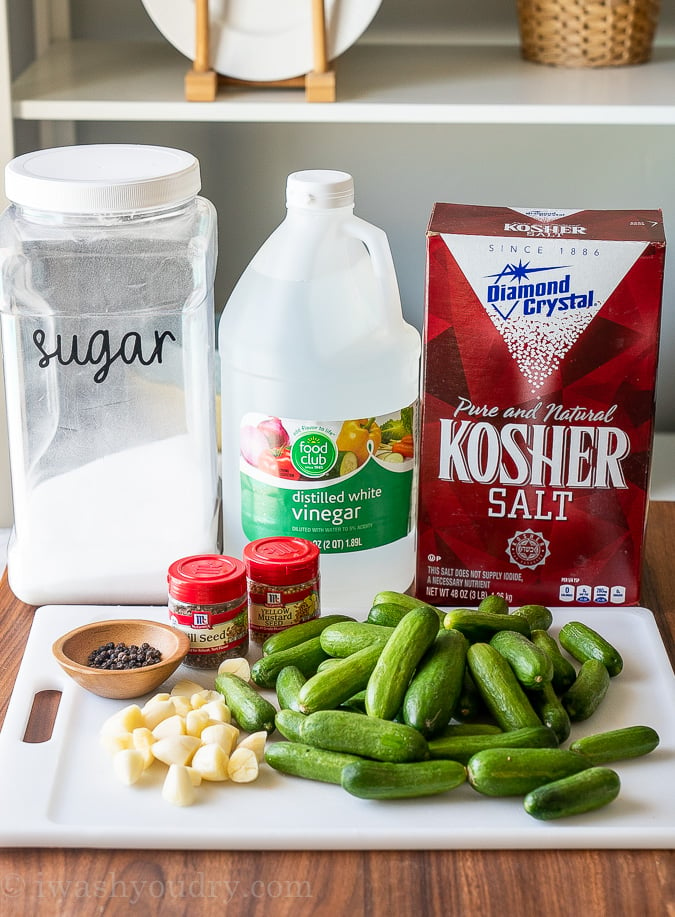
Here’s a basic list of the ingredients you’ll need in order to make these dill pickles at home. As always, you can find the full list of ingredients in the printable recipe card below.
- Pickling Cucumbers
- Dill Seed
- Mustard Seed
- Whole Cloves of Garlic
- Whole Peppercorns
- Water
- White Vinegar
- Pickling Salt – you can also use a kosher salt that does not contain iodine
- Sugar
Special Tools Needed For Canning Pickles
We’re going to be processing the pickles in a water bath, making sure they’re safe to store on the shelf and create a long life for them. Here’s some tools I recommend to have on hand…
- Clean glass mason jars with clean lids – this is what I am using
- A large stock pot with a rack for the bottom – I use my instant pot insert for the rack
- Canning jar lifter tongs
- Funnel for adding brine – you can also use a measuring cup
How To Make Homemade Dill Pickles
Did you know pickles are made from cucumbers?
It blows my kid’s minds when we turn those crunchy cucumbers into delicious, snack-able pickles.
Making homemade pickles is actually quite easy…
BOIL JARS TO SANITIZE It’s important to make sure you dip your glass jars AND lids into a pot of boiling water to fully sanitize them. This way you can rest assured that your pickles will be safe from any harmful bacteria.
PREPARE CUCUMBERS Wash the cucumbers, then trim off the flowering end on each cucumber. There is an enzyme in that end that softens the cucumbers over time, by removing it, we will have crunchy cucumbers.
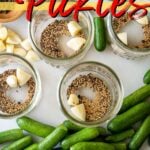
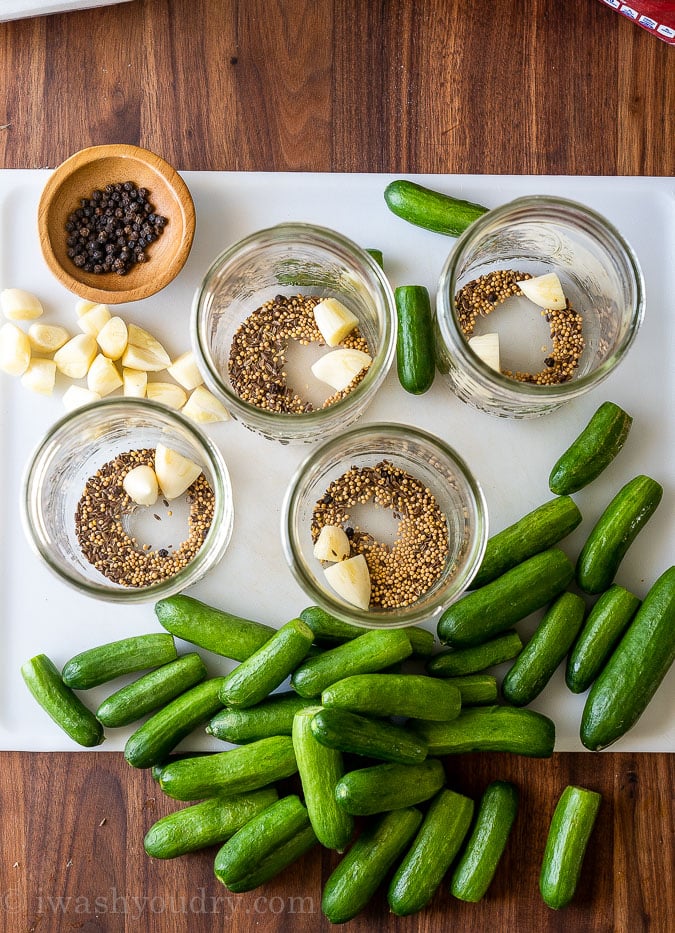
COMBINE PICKLING SPICES I’ve created a simple and easy garlic dill flavor that adds a nice punch of flavor. Just add the ingredients to each jar, then fill the jars with your prepared cucumbers.
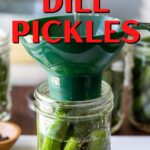
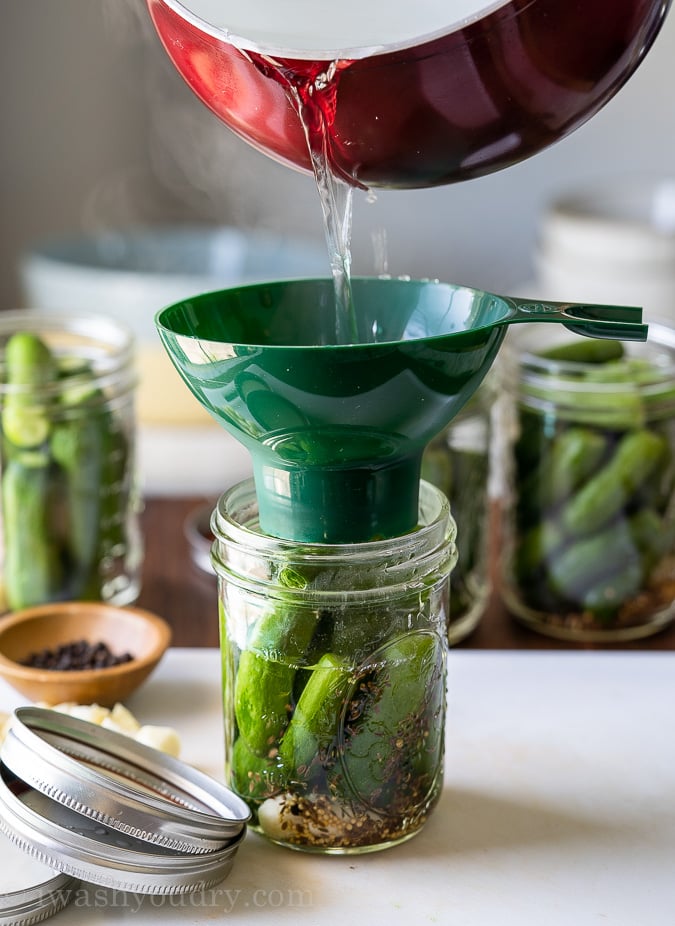
MAKE THE BRINE To make the simple sugar, salt and vinegar brine, you’ll add all the ingredients to a pot and bring to a boil, until the sugar and salt are dissolved. Then just pour the hot mixture into the prepared jars, up to 1/2″ from the rim. Hand tighten the lids, but not too tight.
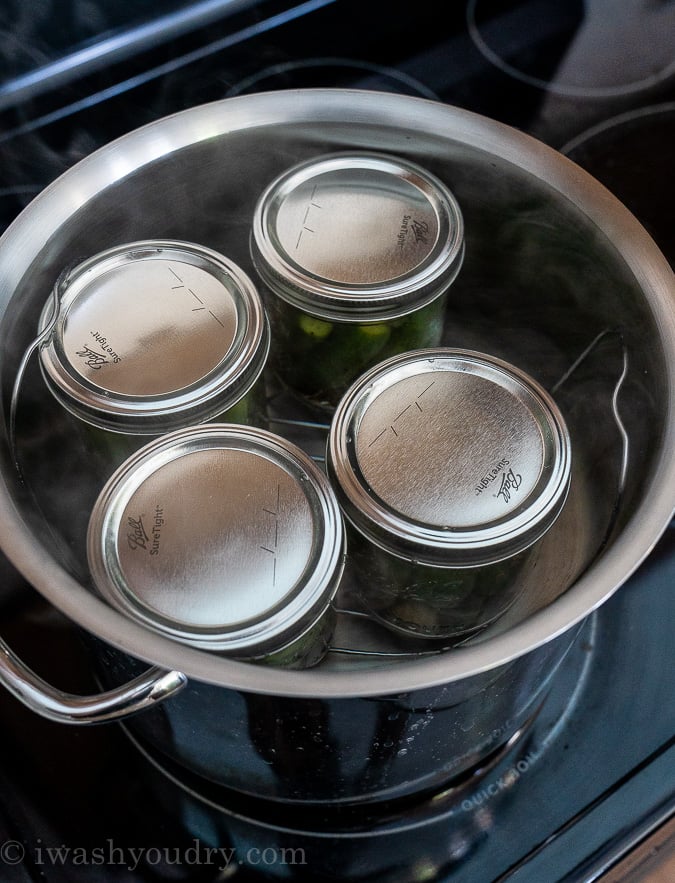
WATER BATH Now is when we turn our cucumbers into pickles! Bring a large pot of water to a boil, with the rack on the bottom. Make sure it’s filled with enough water so the jars are fully submerged. Bring the jars to a boil and let them sit in there for about 10 minutes. Remove from the boiling water with the canning tongs and let cool completely.
What Type Of Dill Should I Use For Pickles?
Dill is a very versatile plant! Did you know there are actually 4 different ways the plant is used?
- Fresh Dill Weed – the leafy, feather-like part of the dill plant that is an herb used in sauces, dressings and of course with seafood.
- Dried Dill Weed – found in the spice aisle, the dried version of the fresh herb, has a sweet and bright flavor.
- Dill Seed – also found in the spice aisle, is the fruit of the plant. It’s more aromatic than the herb and used whole or crushed to add a bright lemony flavor.
- Dill Heads – the part of the fresh dill plant where the flowers bloom. Many recipes for canned pickles call for this, but unless you have dill growing in your garden, they can be difficult to source.
Since I don’t have fresh dill plants growing in my garden, I am using the dried dill seed to give that bright flavor to these canned pickles. It’s easier to find and stores great in the pantry.
Water Bath Canning Method
If you’re new to canning, this method is by far the easiest. It may seem intimidating at first, but you’ll quickly see how easy it is to preserve your veggies or jellies to make them last in your pantry all year long.
PRO TIP – Make sure you use a large pot and allow enough room for the water to come to a rolling boil.
You should see some bubble releasing from each of the jars as they boil in the water bath. This is normal and expected. The release of bubbles helps create a nice seal on the jars.
How Long Do Homemade Pickles Last?
Once you’ve processed your pickles, you’ll want to let them sit for 24 hours on the counter before opening. Press the top of the jar to see if it pops back up. If it does not, then you are good to store the UNOPENED jars in the pantry for up to 1 year.
Make sure to write your dates on the top of the jars so you don’t forget when you made them.
If the lid did not seal for some reason, just place the pickles in the fridge and consume within 7 days. After opening your jars of pickles, they should be stored in the fridge.
How To Customize Flavor of Dill Pickles
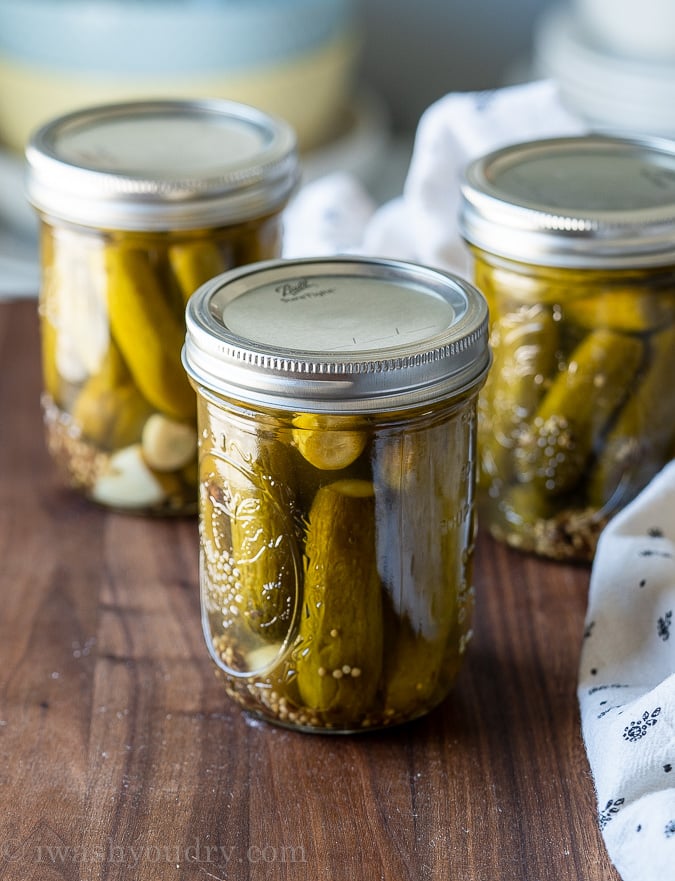
This recipe is for your basic, crunchy dill pickle, with a nice punch of garlic. If you want to customize the flavors or change things up, here are some ideas…
- Swap out the dill seed in each jar for one dill head
- Use pickling spice in place of the dill seed, mustard seed and peppercorn
- Don’t try to use fresh dill weed or dried dill weed as they won’t work for this recipe
- The longer you cook your cucumbers, the softer your pickles will be.
Can I Make Pickle Spears Or Chips?
YES! You can cut or slice your cucumbers however you like and process them the same way I do in this recipe.
I’m using pint size jars, but you can also use quart size if you have larger cucumbers.
My brine is enough for 4 pint size jars, or 2 quart size jars. You can easily double the recipe to increase the amount of brine made.
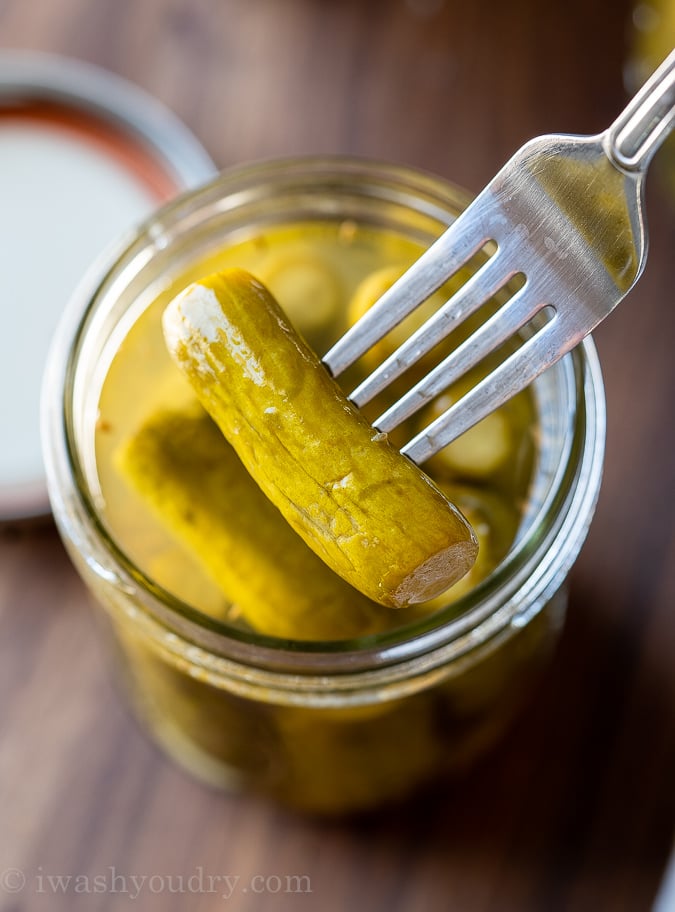
I hope you enjoy this yummy Homemade Canned Dill Pickles recipe and have a bountiful gardening year!
Homemade Canned Dill Pickles
Equipment
- 4 pint size mason jars
Ingredients
- 3 lbs. pickling cucumbers, *see notes
- 4 tsp dill seeds
- 2 tsp mustard seeds
- 4 cloves garlic
- 16 whole black peppercorns
- 2 cups water
- 1 ½ cups white vinegar
- 2 tbsp pickling salt
- 1 tbsp sugar
Instructions
Prepare The Mason Jars
- Clean mason jars and lids with soap and water, then dip in a large pot of boiling water to completely sanitize jars and lids. Carefully remove from boiling water and set on clean towels to dry.
Prepare The Cucumbers
- Wash and rinse the cucumbers. Trim off the ends of the cucumbers, to remove the enzyme in the cucumbers that promote softening. This will keep your pickles crisp and crunchy!
- If your cucumbers are larger, cut them down to size, so they can easily fit into your jars.
Prepare For Pickling
- To each jar, add: 1 tsp dill seeds, ½ tsp mustard seeds, 1 clove garlic and 4 whole peppercorns. Divide the prepared cucumbers between the jars, packing them as tightly as possible.
Make The Pickle Brine
- In a medium size pot, combine 2 cups of water, 1 ½ cups white vinegar, 2 tbsp pickling salt and 1 tbsp sugar. Heat over medium-high heat until the mixture boils and sugar and salt is dissolved.
- Pour hot mixture into prepared jars, leaving just ½" of headspace (to the top). Place on lids and hand tighten, but not too tight.
Water Bath Canning Instructions
- Prepare a large stock pot, fitted with a rack on the bottom, and fill with water. Bring water to a rolling boil. Carefully add the jars, making sure they are submerged under water, and let them boil for 10 minutes.
- Bubbles will escape from the jars, this is normal! Carefully remove the jars from the boiling water and set aside on a cooling rack. You might hear a loud POP from the lids as they seal, this is normal.
- Let the pickles sit for at least 12 to 24 hours, before pushing down on the lid to test if it's sealed. If for some reason, the lid did not seal, place pickles in the fridge and enjoy within 7 days. If sealed, the pickles are shelf stable and can be enjoyed within 1 year (refrigerate after opening).
Notes
Nutrition
PIN THIS IMAGE TO SAVE THE RECIPE
Hi, how do the cucumbers not go soft if you are putting hot liquid in the jar with them & then boiling the jar for 10 minutes?
Thank you
Great recipe, however, coild you please tell me the size of the jars?
Regards,
Ricky
I use pint size jars for this recipe. The liquid is enough for 4 pint size jars, or 2 quart size jars.
Can you replace Dill seeds with Dill Weed?
Best pickle recipe, super good. I want a hot flavor, what could I add to this recipe to make it spicy?
Just made this receipe they look good but my dill seed is staying in the top of my jar ?
I made two batches of these, a total 8 quarts, half with store bought pickling cucumbers and half with Lebanese cucumbers from my garden. I did do a short cold water soak, cut off the blossom end and added a peice of grape leaf at the bottom of each jar since I have grape vines and this is the old school way of maintaining a crunchy pickle, unnecessary but available. I decided to try some jars with the cucumbers whole and others halved or speared. The flavour was very good and balanced with a nice amount of dill and coming through, to be honest very similar to a commercial pickle flavour like Bicks in Canada, surprisingly so. My family was split between loving and liking these, a couple noticed the hint of sweetness (it’s very light and does offset the vinegar a bit.so don’t worry they aren’t sweet pickles we just eat alot of pickles in my house and have our preferences) two weren’t sure they wanted me to include the bit of sugar next time but thought they were good overall. If your brine isn’t covering, you probably haven’t packed your jars tightly but even then you will have JUST enough brine so be careful not to spill any. I personally let my jars sit 6 weeks based on the internet consensus and friends advice who can yearly. These will all be happily consumed and I wouldn’t hesitate to make this recipe again. Thanks for sharing a great recipe!
I’m so happy to hear that you are enjoying the pickles Holly! Thank you for your sweet comment. 🙂
this recipe should be removed from the internet!! how can you knowingly use less than a 1:1 vinegar:water ratio and let the people waste time and ingredients. I had no idea until AFTER I made the pickles and read the comment section. I am so angry!! absolutely disgraceful!!!
I promise you, there is nothing wrong with using a smidgen less vinegar for these canned pickles as long as you’re processing them in the hot water bath as the recipe directs. These pickles are perfectly safe and shelf stable.
I also became concerned about this brine recipe ratio and whether it was acidic enough, but I hope that I can put your mind at ease. I made two batches of these a week apart and tested both with a calibrated pH meter today and proper testing techniques (1 week old and 24hrs old). They tested at 3.72 and 3.74. Food safety for water bath canned pickled vegetables is a pH of 4.6 or below. For reference, average pickles pH range is about 3.2 to 3.6.
Thank you for sharing Bonnie! I appreciate it!
I see comments on soaking the cucumbers in cold water but I did not see this in the steps. I couldn’t find the *see notes piece. Can someone share what to do ?
I would like to try this recipe but would like to quarter or slice cukes….any adjustments needed?
No adjustments needed! Just pack the jars and you should be good.
Can you do sliced? If so what do you do differently
Hello! Thank you for this recipe as it was my first time canning pickles! All I have is fresh dill, and I ended up using dill heads instead of the dried dill seed. Will this effect the safety of the brine at all?
Can you use this brine for pickled eggs or asparagus?
For sure!
I made these but then was extremely disappointed to learn that the safe canning ratio is actually 1:1 water to vinegar, not the 1:.75 ratio that this recipe calls for. So, now I have a double batch or these that I am not confident are safe to eat.
Since you are boiling these jars and canning the pickles using the proper process listed above to create shelf-stable jars, you are definitely fine to use less vinegar in this recipe.
These are SOOOOOOO GOOD! perfectly crisp & seasoned. We added a few sprigs of fresh Dill and a bay leaf to each jar and the came out wonderful. Super easy to make. Just canning or second batch today and half the jars from our first batch have been shared to fellow Pickle lovers already. I made spears and chips.
Love this recipe! Simple, tasty, and easy to make. My husband hates sugar in pickle or relish recipes so I just left it out, and these were a big hit. Won’t be using any other recipe from now on!
** I did soak the cucumbers in cold water with a smidge of turmeric for 1-2 hours before canning, and added a dash of turmeric to the brine for color and a slight bump in flavor. Turned out perfect.
My first time making these. I followed the recipe as printed. Only thing was I only had them in the ice bath for an hour. Anyway, they turned out with great flavor, but they were not crunchy; in fact a lot of the larger ones were mushy. The only other variance was that I boiled them for 6 minutes, versus the 10 minutes in the recipe. Any advice would be very much appreciated. TY
If you found the pickles mushy, it’s most likely that the end was not cut off enough. There is an enzyme in the end that will promote a softening in the cucumber, so by removing this, your cucumbers will turn into crunchy pickles. For safety purposes though, it is recommended to cook the jars for the correct amount of time to make them shelf stable.
My jars had brine that covered the cucumbers and I left the required headspace, but after processing using the warm bath/boiling method some of the cucumber slices are not completely covered in the brine. The seals have popped. Will this be an issue?
This is fine, they are perfectly safe if the lids popped. Worst case, the top ones aren’t as pretty as the ones in the brine.
If it is properly sealed, how long do you wait before unsealing and eating? Is it a few weeks or can you theoretically eat them after a few days?
According to the recipe, you can eat after 12 hours.
Some folks say Canned dill pickles, after a boiling water bath, should ideally sit for 3-4 weeks for optimal flavor development.
Can you save leftover brine?
Worked really well, but for me the brine was only enough for 3 pint jars, not 4, so I had to stop in the middle and make more. This isn’t difficult, but did interrupt my flow.
Could it be that your jars weren’t filled tightly enough with cucumbers? That could make up the difference in the amount of liquid needed.
What an easy recipe to work with. Now I wasnt made just a few jars… so my friend and I did the math, converted pints to quarts etc. We also decided on using dill seed (in the past we have used the seed heads) but using seed alone was so much easier.
In total 30 quart jars, and 10 pint jars. Oh plus one with left over Jalapeños… (yes we spiced maybe a dozen or so jars with Jalapeños, for the spicy lover)
I can totally recommend this recipe. So easy to use.
Made these in the pints – LOVED them!! but have so many cucumbers would like to double and can in quarts. How long should my water bath time be?
I would increase the water bath time to 15 minutes for quart sized jars. Enjoy!
Hi! I have some fresh dill I need to use up and was wondering if I could use it somewhere in the recipe?
Also, can I use kosher salt instead of pickling salt?
If I was to use the pickling spice instead of the dill seed and mustard seed and peppercorns how much do I put in each jar?
Try adding dill dry or fresh to some ranch for a kick
Hi, first time making pickles and I am excited to try your recipe! Is there a recommended time to let the pickles sit before you open them? I read in a different recipe to leave the pickles on the shelf for a month before opening. I don’t know if I can wait that long! Lol
You can open them as early as 24 hours! The longer they sit the stronger the flavor though, so keep that in mind!
Just a quick question. If I were to use pickling spice in place of the other spices, how much do I use per jar? Thank you!
I would use about 2 tsp to 1 tbsp per jar depending on how strong you want the pickles.
Hi Shawn,
I made these pickles July last year and looking to make more this season, however, our batch last summer turned out very soft. They tasted fantastic so I want to try this recipe again, especially considering how many other comments mention the crisp & crunchiness. I am wondering if it’s possible I just didn’t cut enough of the enzyme end off. Any advice on making sure I do cut enough off this time?
Would you recommend Pickle Crisp to be on the safe side? Or a ice water bath first (I did this before picking asparagus and that turned out super crisp & perfectly crunchy!)?
Thank you!
P.S. we didn’t want to waste and are just slicing the soft batch instead – they are perfect for burgers!
It could definitely be that the ends needed to be trimmed more. Also, if your cucumbers were on the smaller side, it could be that they didn’t need to cook as long?
If I was to use the pickling spice instead of the dill seed and mustard seed and peppercorns how much do I put in each jar?
I water bath can my Dills in quart jars and add 1/8 teaspoons of Pickle Crisp but also add a large Grape leaf since I live in the heart of Wine Country here in Northern California. I can for 10 minutes at a roiling boil and always have crisp crunchy pickles, as long as my cucumbers are fresh.
Erica
I water bath can my Dills in quart jars and add 1/8 teaspoons of Pickle Crisp but also add a large Grape leaf since I live in the heart of Wine Country here in Northern California. I can for 10 minutes at a roiling boil and always have crisp crunchy pickles, as long as my cucumbers are fresh.
David